You arrived in the U.S. with limited resources. What was the internal force that pushed you to build a real estate empire in Miami?
What pushed me was very simple: nobody was going to build my future for me. I came to the U.S. in 1968 with education—a degree in economics, a master’s in urban planning—but without money, without connections.
What I did have was conviction. I realized early that cities are living organisms. If you understand them, if you respect them, you can create something meaningful. When I founded The Related Group in 1979, I wasn’t trying to be a billionaire; I was trying to build a career that matched my ambition and my identity.
My foundation remains the same: resilience to withstand rejection, vision to see what others don’t, and execution to turn ideas into concrete reality. Miami was my canvas. I saw what it could become long before most people did.
Your book Powerhouse Principles was published in 2008. What core lessons does it capture, and what would you update today?
The book outlined my five essential principles; Passion, Discipline, Learning from failure, Flexibility, Responsibility Those principles built my career. But if I added a sixth principle today, it would be impact. Wealth alone is not enough. Beauty alone is not enough. A city needs culture, inclusion, and purpose. That’s why art, public spaces, and affordable housing have become so central to my work.
Today, real estate developers must think beyond profit—our work shapes how people live.
Do you plan to write another book?
I’ve considered it. Since 2008, the world has changed dramatically—financial crises, globalization, Miami’s rise as a global capital, the intersection of art, design, and real estate.
If I write another book, it won’t be a rehash of old lessons. It will reflect the evolution of a city, of an industry, and of myself.
Not now—but when the next chapter is truly worth telling, I’ll tell it.
Your projects combine architecture, contemporary art, and luxury living. How do you innovate aesthetically without compromising profitability?
People often think that “beautiful” and “profitable” are opposites. They are not. Great design creates value.
Every Related project centers on four pillars:
- Strategic location
- High-caliber design teams
- Functionality
- Differentiation
Art is not decoration. It is identity.
Architecture is not a box. It is experience.
When you combine those elements intelligently, the market responds. That’s why our buildings command a premium and why Miami’s skyline has become a cultural statement, not just a collection of towers.
You build both luxury towers and affordable housing. How do you balance those two worlds?
I started in affordable housing—that is the root of my career. Luxury came later.
The two do not compete. They complement each other. Luxury provides margins, yes, but affordable housing provides stability and social cohesion. A city that only serves the wealthy becomes fragile.
So my rule is simple: as I build for the top of the market, I must also contribute to the foundation of the city. That balance keeps Miami diverse, dynamic, and resilient.
What advice would you give a young entrepreneur with ideas but little capital—much like yourself decades ago?
Three things:
- Start small but start now. Waiting for perfect conditions is another form of fear.
- Educate yourself relentlessly. Markets reward knowledge.
- Protect your reputation. In real estate, trust is currency. You can lose money and recover. Lose trust, and you’re done.
Find a niche others overlook. That’s how I built my early career. The opportunity is always hiding where people aren’t looking.
Where do you see the greatest real estate opportunities in the next 10 years—and what risk is most underestimated?
Opportunities lie in global-facing cities with demographic momentum—Miami, of course, but also emerging secondary markets in the Southeast U.S. and select international locations.
But the biggest underestimated risk?
Climate resilience.
It’s no longer optional. A developer must think 50 years ahead. If you ignore environmental realities, you’re not building a legacy—you’re building a liability.
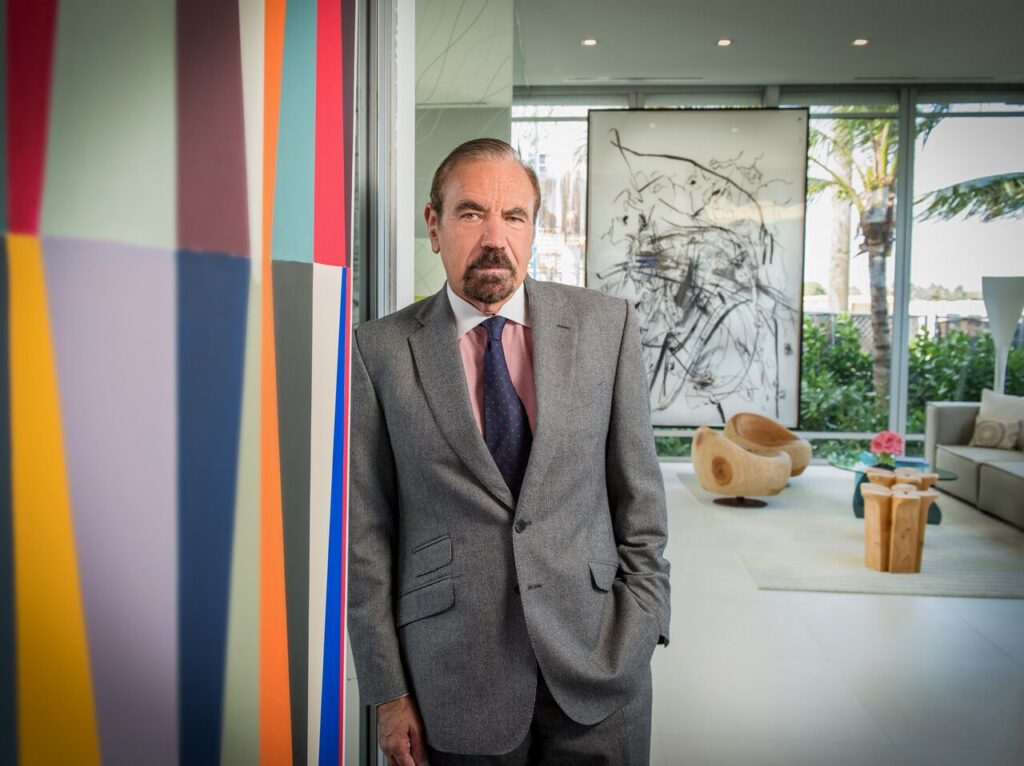
The Story of Jorge Perez
Jorge M. Pérez’s story is the blueprint of the modern American dream—relentless, calculated, and culturally transformative. Born in Argentina to Cuban parents, raised across Latin America, and educated in the United States, Pérez arrived with no wealth but with a rare combination of discipline, urban-planning knowledge, and an instinct for opportunity.
In the late 1970s, while Miami was still dismissed by many as a chaotic, transitional city, Pérez saw what others didn’t: the foundations of a global capital. He began with affordable housing, a sector most developers avoided, and proved that disciplined execution could turn overlooked neighborhoods into stable communities. From there, he expanded into luxury developments that would redefine Miami’s skyline—projects driven not just by profitability, but by architecture, art, and identity.
Founding The Related Group in 1979, Pérez grew the company into one of the most influential real estate development firms in the United States. His projects across Miami, South Florida, and beyond combine modern design, cultural elements, and large-scale vision. His devotion to the arts—culminating in the Pérez Art Museum Miami—cemented his role not only as a developer, but as a cultural architect of the city.
Through market crashes, shifting demographics, and global cycles, Pérez consistently adapted. His philosophy remained anchored in resilience, flexibility, and long-term impact. What began as a personal pursuit for stability evolved into a mission to shape Miami’s future—economically, socially, and artistically.
Today, Jorge Pérez stands as one of the most influential Latino business figures in the United States. His legacy is not just measured in towers or square feet, but in the transformation of a city and the opportunities created for generations that came after him. His story is proof that vision, discipline, and cultural purpose can rewrite the destiny of both a man and the place he chooses to build.