From kilowatts to smoke-free luxury
Cities no longer benchmark progress in horsepower but in kilowatts, software, and design. Urban mobility—trams, buses, cars, micromobility—has entered a stage where performance lives alongside environmental rigor, responsible aesthetics, and a promise: moving better, not merely moving more.
Luxury changes its texture
Luxury on wheels trades noise for the craft of silence. Acoustic cocoons, recycled or vegan textiles, certified woods, low-impact pigments, and screens that whisper: prestige with principles. Cars like the Tesla Model S and Porsche Taycan channel a less guilty desire—supercar thrust with aesthetic and environmental coherence. The difference is in the details: soft ambient lighting, fatigue-cutting ergonomics, assistants that disappear into the experience.
Core idea: new luxury is not loudness, it’s controlled calm.
Intelligent mobility: the city as interface
Electrification is the floor, not the ceiling. Next up is intelligent mobility: V2X networks, data-guided traffic, sensor-synced signals, reversible lanes run by algorithms. Your phone already acts as the city’s remote—stitching multimodal routes (subway, e-bikes, scooters, buses) into a single itinerary with fewer emissions and less dead time.
- Driver assistance smooths stop-and-go waves that inflate congestion.
- Dynamic pricing nudges trips away from saturated hours and zones.
- Anonymized data redraw stops, frequencies, and bike lanes with surgical accuracy.
An updated urban fabric
Complete streets, hushed trams, low-emission zones, protected bike lanes, and a charging mesh expanding block by block. The brief: less noise, cleaner air, healthier commutes—without surrendering style or minutes.
- Home charging (Level 2) as a nightly ritual.
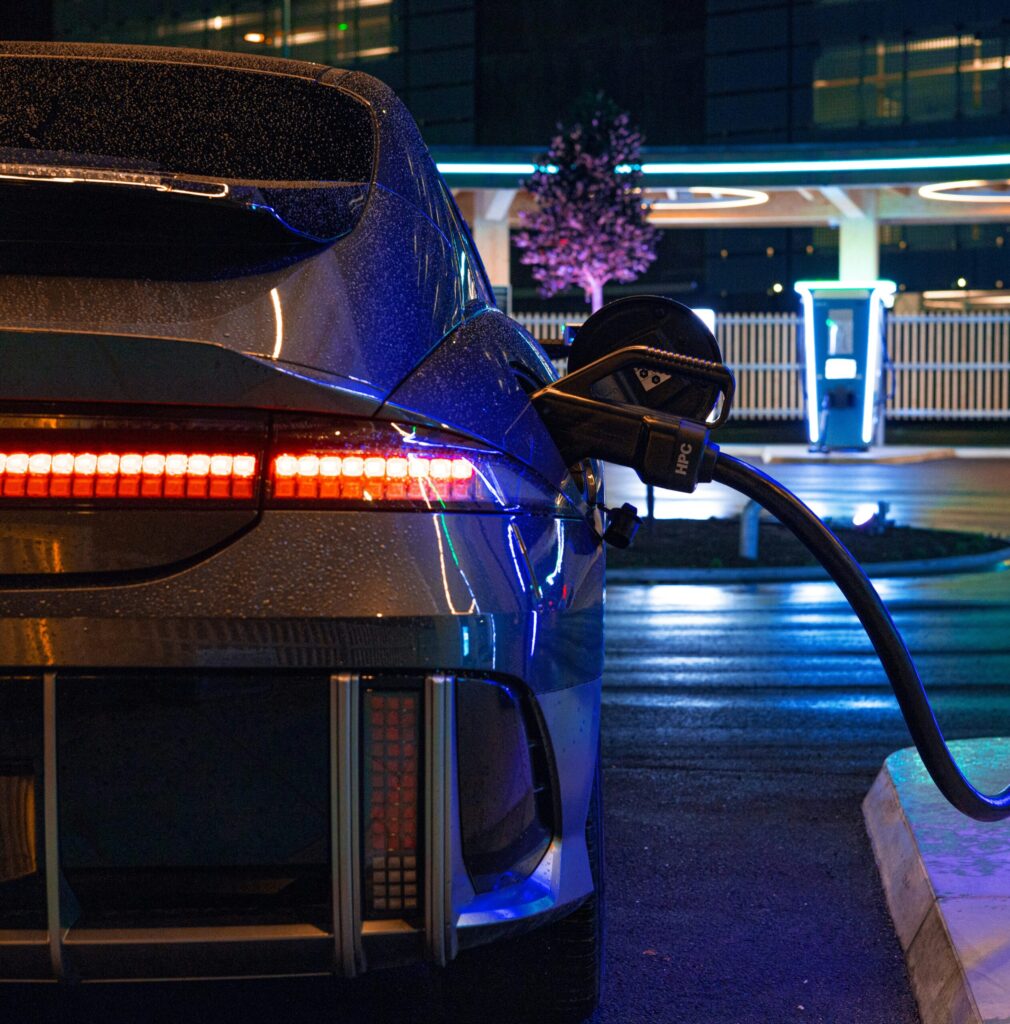
- High-power DC along corridors and interchanges.
- Inductive pads for fleets and taxi queues.
- Bidirectional (V2H/V2G) turns your car into a battery for home or grid.
Cities setting the tempo
- Oslo backs EVs, densifies charging, and limits combustion downtown.
- San Francisco boosts electric trams/buses and normalizes cleaner habits.
- Shenzhen runs a 100% electric bus fleet (16,000+ vehicles).
- Stockholm and Amsterdam hand the foreground to walkers and cyclists (e-bikes included).
- Berlin and London invest in zero-emission transit and use congestion charges to deter dirty traffic.
The signal is unmistakable: every ride can be efficient, quiet, and sharp-looking.
Beyond batteries: necessary nuance
A clean narrative requires material honesty.
- Critical minerals demand traceability, fair labor, and ecosystem safeguards.
- Second life gives retired packs a role in buildings and grids before recycling.
- Recycling aims to close the loop with higher recovery and less waste.
Hydrogen, buses, and the urban sea
For long hauls and heavy loads, green hydrogen emerges—intercity buses, trucks, even electric/hybrid ferries for coastal metros. It won’t replace batteries in dense cores, but it complements logistics and ports.
The economics of movement: from owning to accessing
Ownership gives way to Mobility-as-a-Service: one pass for subway, bus, e-bike share, carshare, and electric taxis. Add per-mile insurance, on-demand maintenance, and congestion payments into a single wallet. Result: less friction, more predictability.
- Companies electrify fleets on total-cost logic.
- Neighborhood hubs reduce the need for a second car.
- Hotels/retail treat charging as hospitality (coffee + kilowatts).
Safety, privacy, and equity
Sensors save lives, but data must respect privacy. Who stores it, for how long, and for what purpose is not a footnote—it’s a principle. Accessibility isn’t optional: level boarding, tactile cues, audio guidance, protected crossings. If the future excludes, it isn’t a future.
Move smarter today: a micro-playbook
- Mix modes: subway + e-bike for the last mile.
- Time windows: dodge peak periods; let the app steer you.
- Charge wisely: at night at home; use DC fast only on trips.
- Upkeep: low-rolling-resistance tires and proper pressure = range.
- Safety with style: light helmet, front/rear lights, solid U-lock.
The aesthetics of what doesn’t roar
Automotive design enters a quiet phase: clean profiles, flush handles, aero that trims energy and wind. Inside, tactile restraint: fewer buttons, better materials, interfaces that don’t shout. Kilowatt luxury is felt when you don’t have to think about it.